
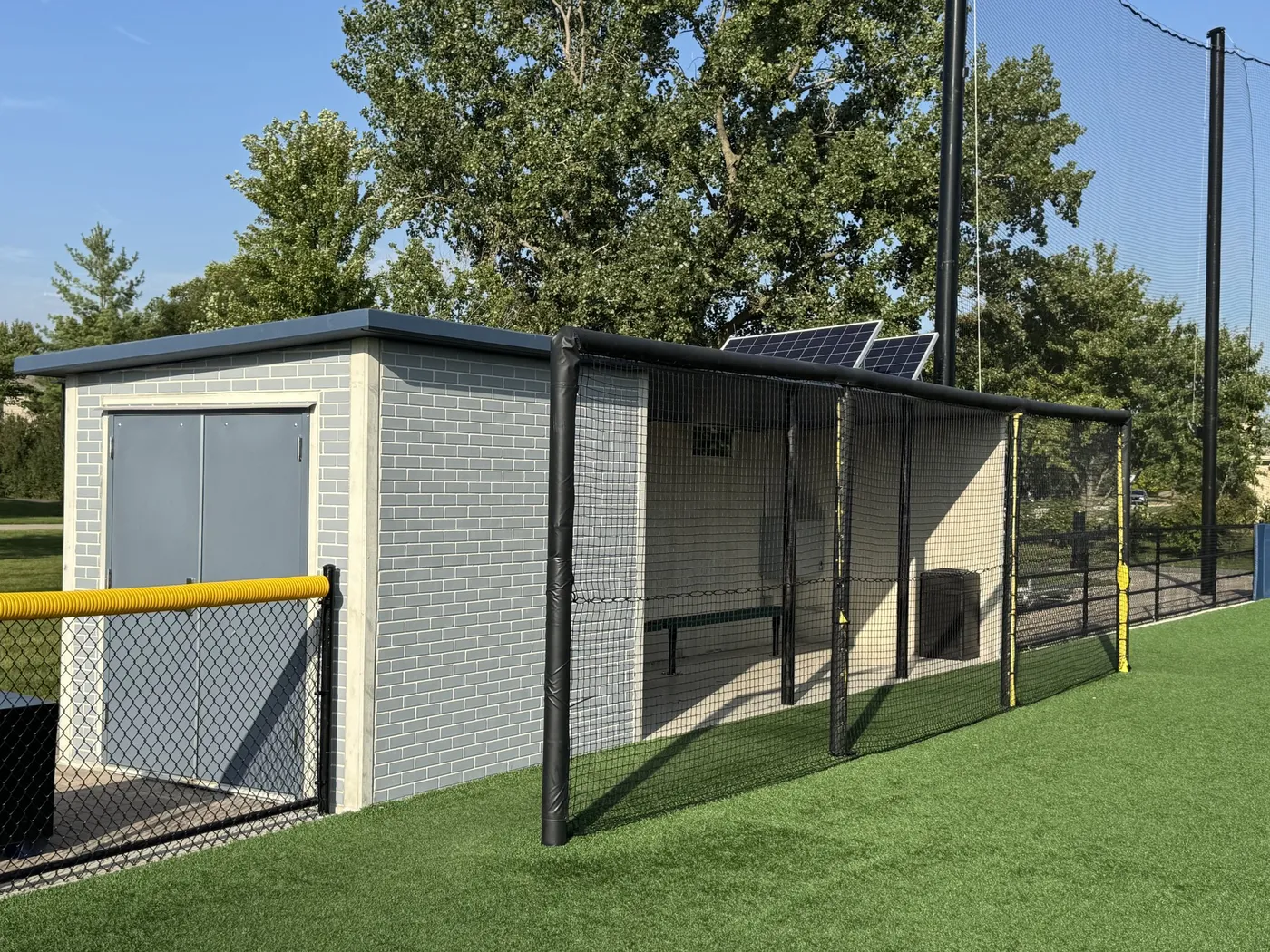
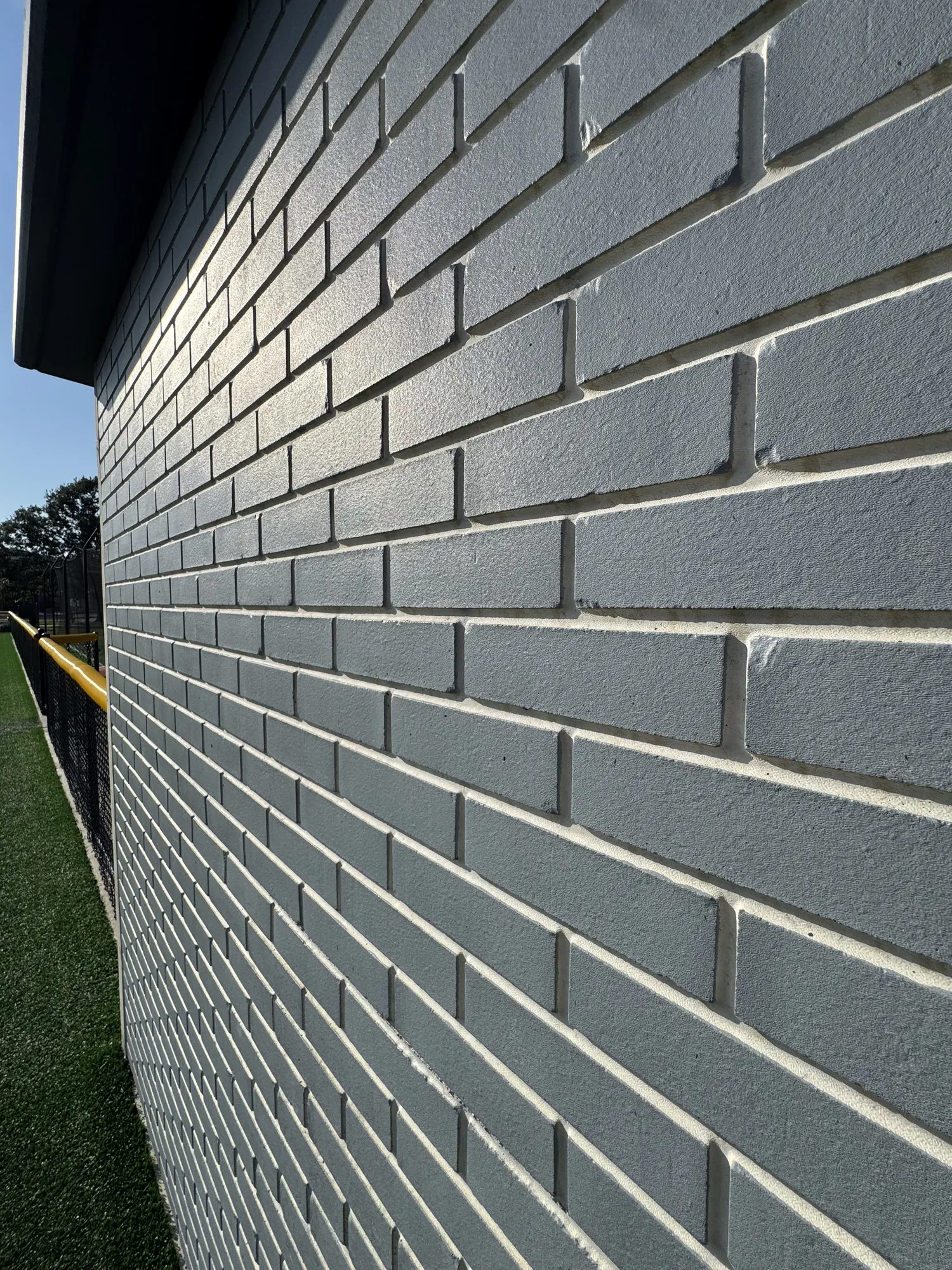
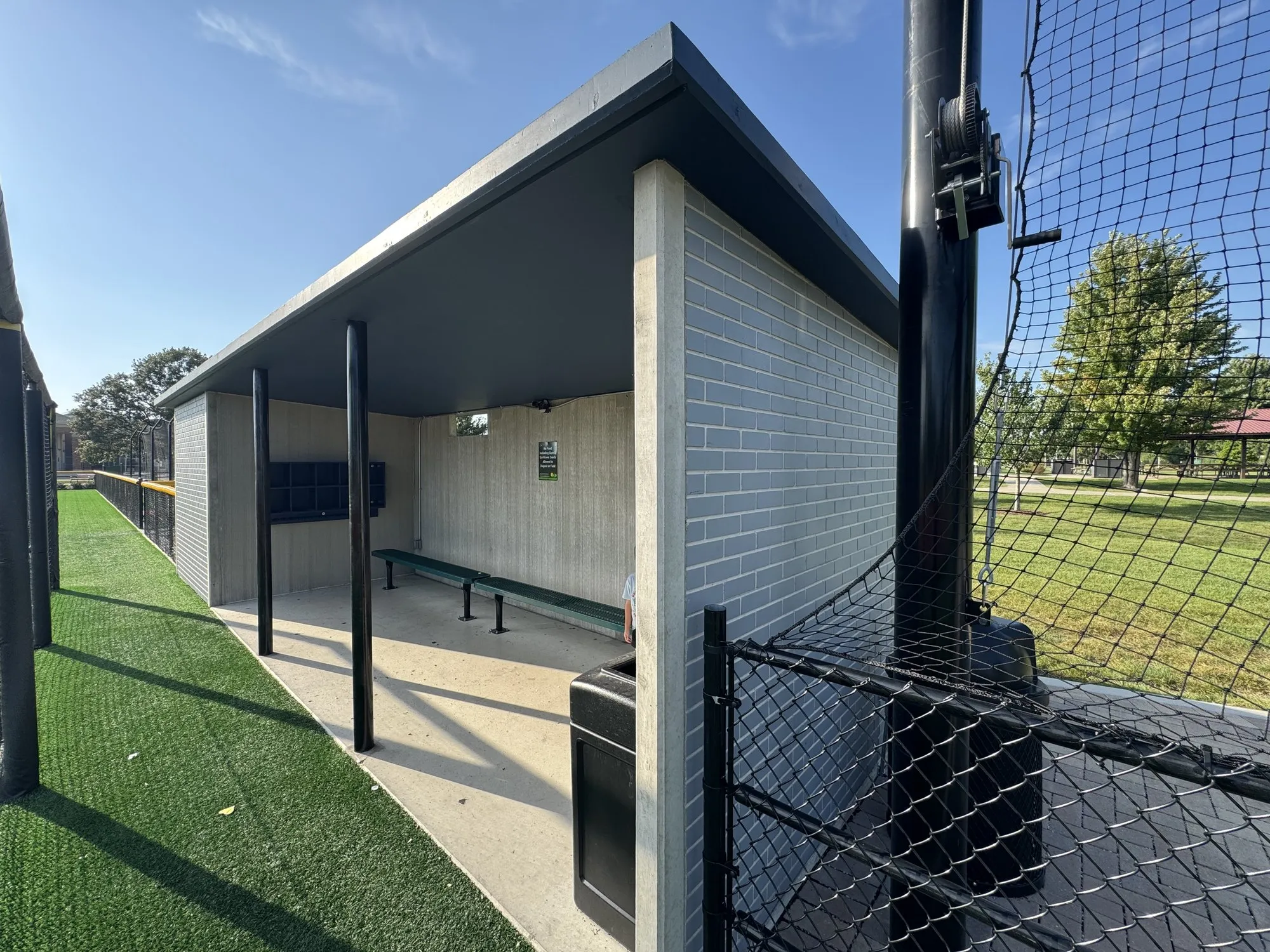
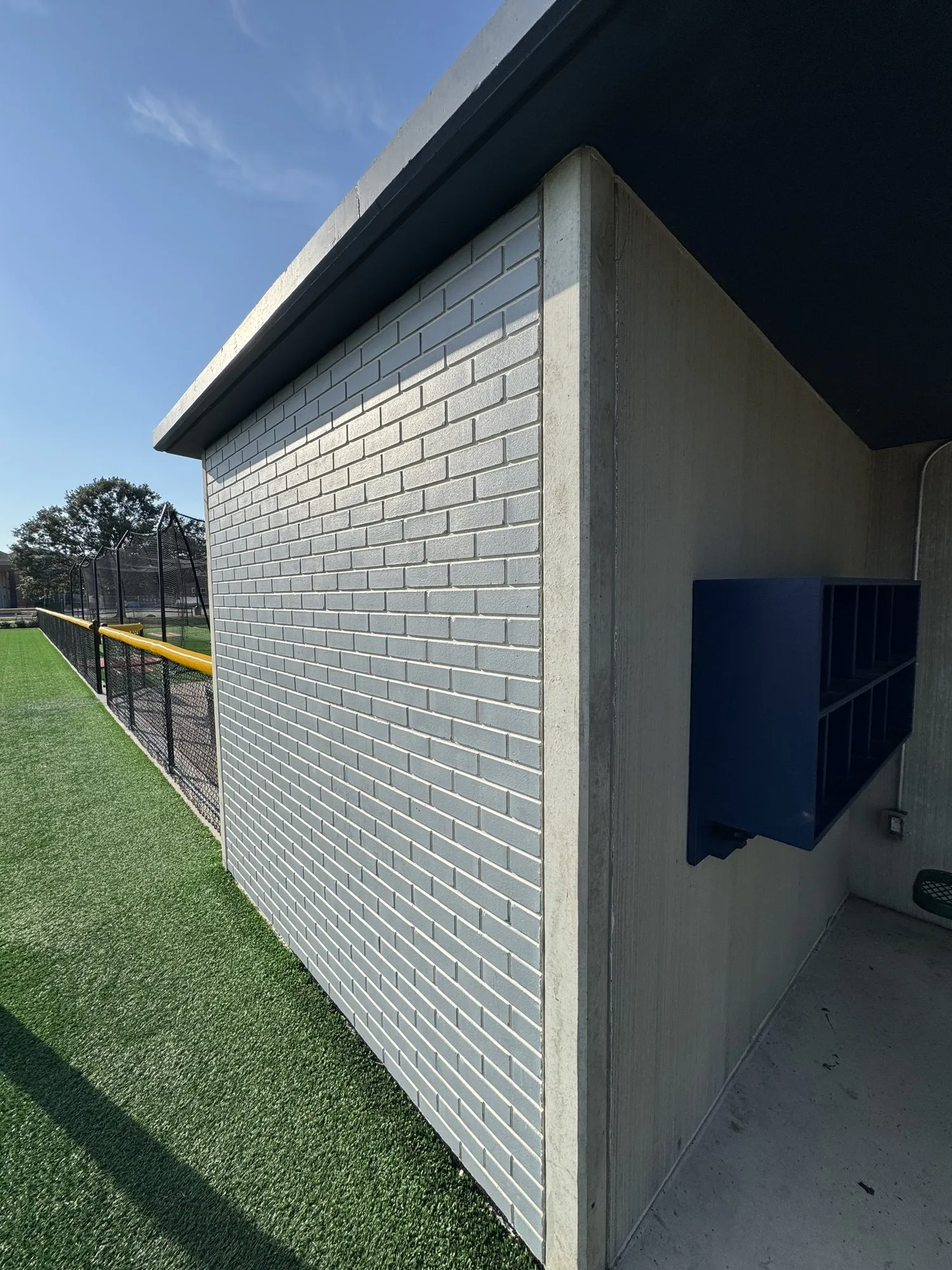
The dugouts at Field 32 in Lemont, Illinois are precast concrete with a brick-pattern formliner finish. Each one was cast in a plant, delivered as a finished building, and painted light blue so the running bond reads as masonry from the bleachers and up close. They were part of the Lemont Park District’s $1.2 million rebuild of the fully accessible Miracle Field, completed in December 2024 and reopened as Field 32 on April 12, 2025.
Walk up and you see light blue brick, tight joints, and a dark roof edge. Put a hand on the wall and it is one piece. There is no mortar to fail, no individual unit to work loose, and no wall to relay after a decade of Illinois freeze and thaw.
Precast gets a brick face one of two ways. The method this chapter’s producers use most is thin brick: real clay units about a half inch thick, set into a liner and cast into the panel, so the finished wall is brick bonded to the concrete for good. Field 32 took the other route. A brick-pattern formliner cast the bond and the joint depth into the concrete, and paint supplied the color. It costs less, it suits a small park building, and it is the right call when a district wants the look of brick on a structure that has to take abuse for decades.
That is a deliberate choice for a field built to be used hard by people of every ability, and it is the part of the Field 32 story that does not make the ribbon-cutting coverage.
Field 32 at a glance
- Location: Centennial Park, 16028 127th Street, Lemont, IL
- Owner: Lemont Park District
- Dugouts: precast concrete, brick formliner finish, painted; storage room with steel doors; rooftop solar panel
- Also new: fencing and netting system, scoreboard, batting cage, ADA-compliant synthetic turf
- Cost: $1.2 million, with a $600,000 OSLAD matching grant from the State of Illinois
- Timeline: grant applied 2022, designed 2023, built 2024, reopened April 12, 2025
- Named for Danny Rizzo, number 32 at Lemont High School
The field
Field 32 sits at Centennial Park, 16028 127th Street. It opened in 2007 as Miracle Field, a fully accessible ballfield the district reports was nearly 100 percent donated by community supporters and organizations. It has been home to the SEASPAR Spartans, the Lemont Baseball and Softball Club, athletic programming, outdoor fitness classes, and day camp ever since.
By 2022 it needed a full rebuild. The district applied for an Open Space Lands Acquisition and Development grant that year, was awarded $600,000 in matching funds, put design through 2023, and built through 2024. The renovation was finished in December 2024 and the field held its grand reopening on April 12, 2025. Total cost: $1.2 million, the OSLAD money matched from the district’s capital reserves.
The scope, in Executive Director Louise Egofske’s words at the reopening: dugouts, a new fencing and netting system, a new scoreboard, a batting cage, and a new ADA-compliant synthetic turf field.
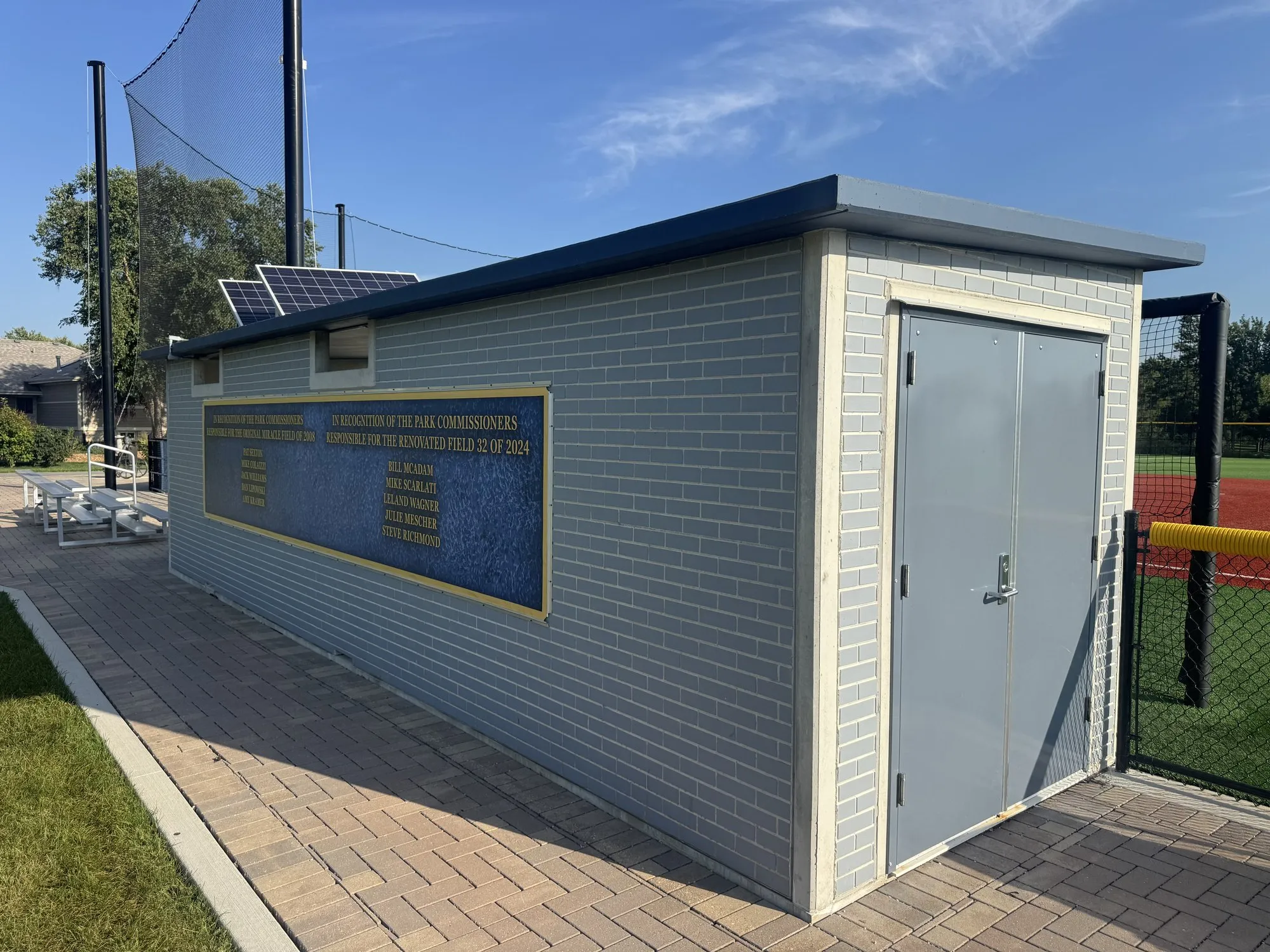
The Rizzo family and the Danny Rizzo Foundation contributed $25,000, and the district renamed the field for Danny Rizzo, who wore number 32 at Lemont High School. A plaque on the dugout wall names the commissioners behind the original 2008 field and the 2024 rebuild.
What precast concrete does for a dugout
A dugout is a small building with a hard life. It takes cleats, bats, thrown helmets, weather from every side, and long stretches with nobody watching it. It also has to be there in April, every April, without a maintenance line item attached.
Precast handles that better than the alternatives a park district usually weighs, and the reasons are plain.
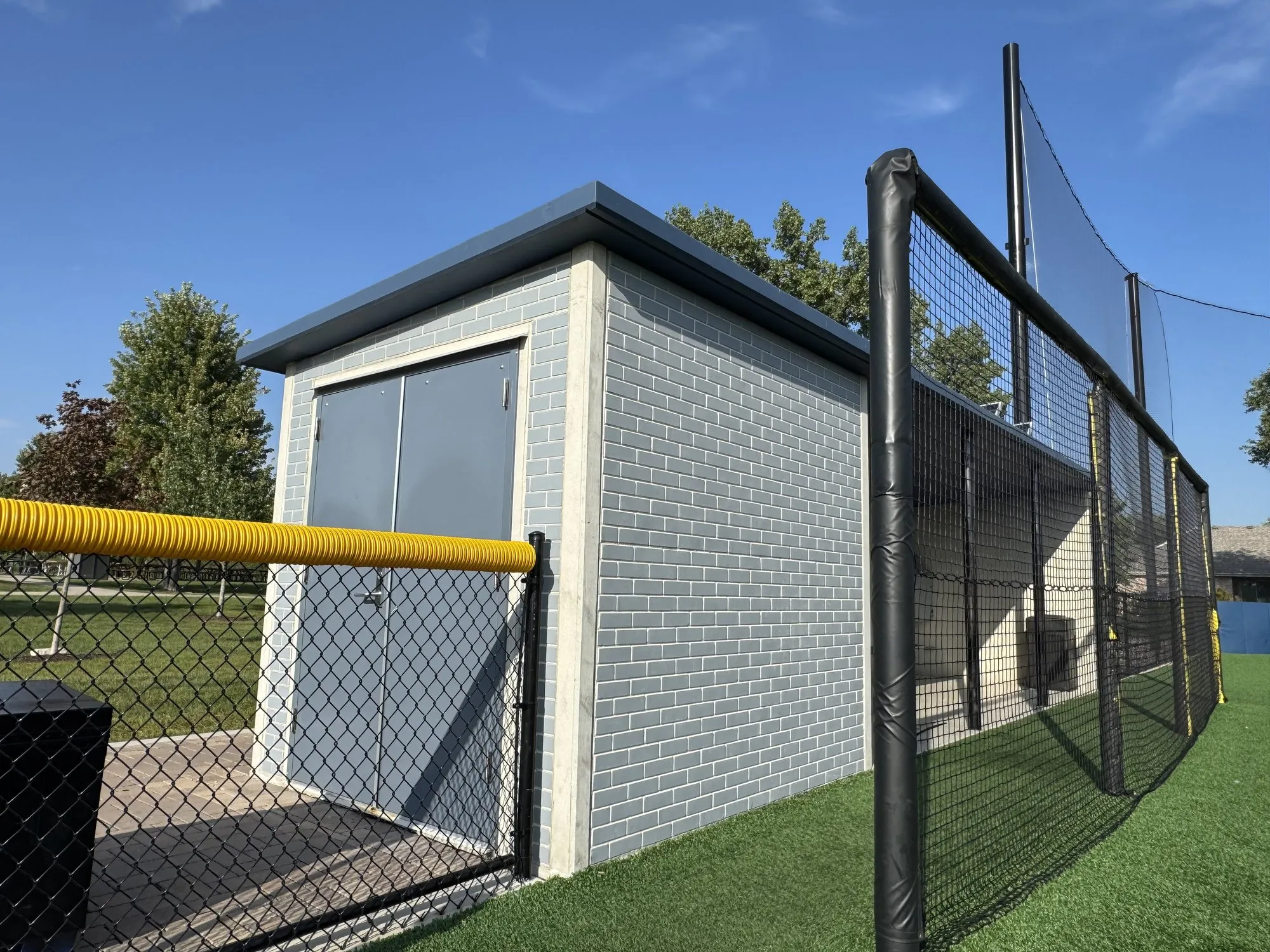
It arrives finished. The dugout is cast in a plant, cured under control, and delivered on a truck. Setting takes hours. A block-and-wood dugout is an open jobsite for weeks, next to a field people want to use.
It does not rot, rust, or burn. Concrete has no wood to soften, no fasteners to corrode from the inside, and nothing to catch. The Field 32 dugouts carry a storage room at one end with steel doors and a solar panel on the roof, all on a shell that will outlast every one of them.
It shrugs off abuse. Vandalism and graffiti are a fact of life for park buildings. Concrete takes far less damage than the materials it replaces, and an anti-graffiti coating cleans up in an afternoon.
The finish is up to the owner. Thin brick gives a wall that is brick. A formliner with paint gives the pattern at lower cost. Lemont chose the formliner and got a light blue brick face that matches the rest of the campus.
Inside
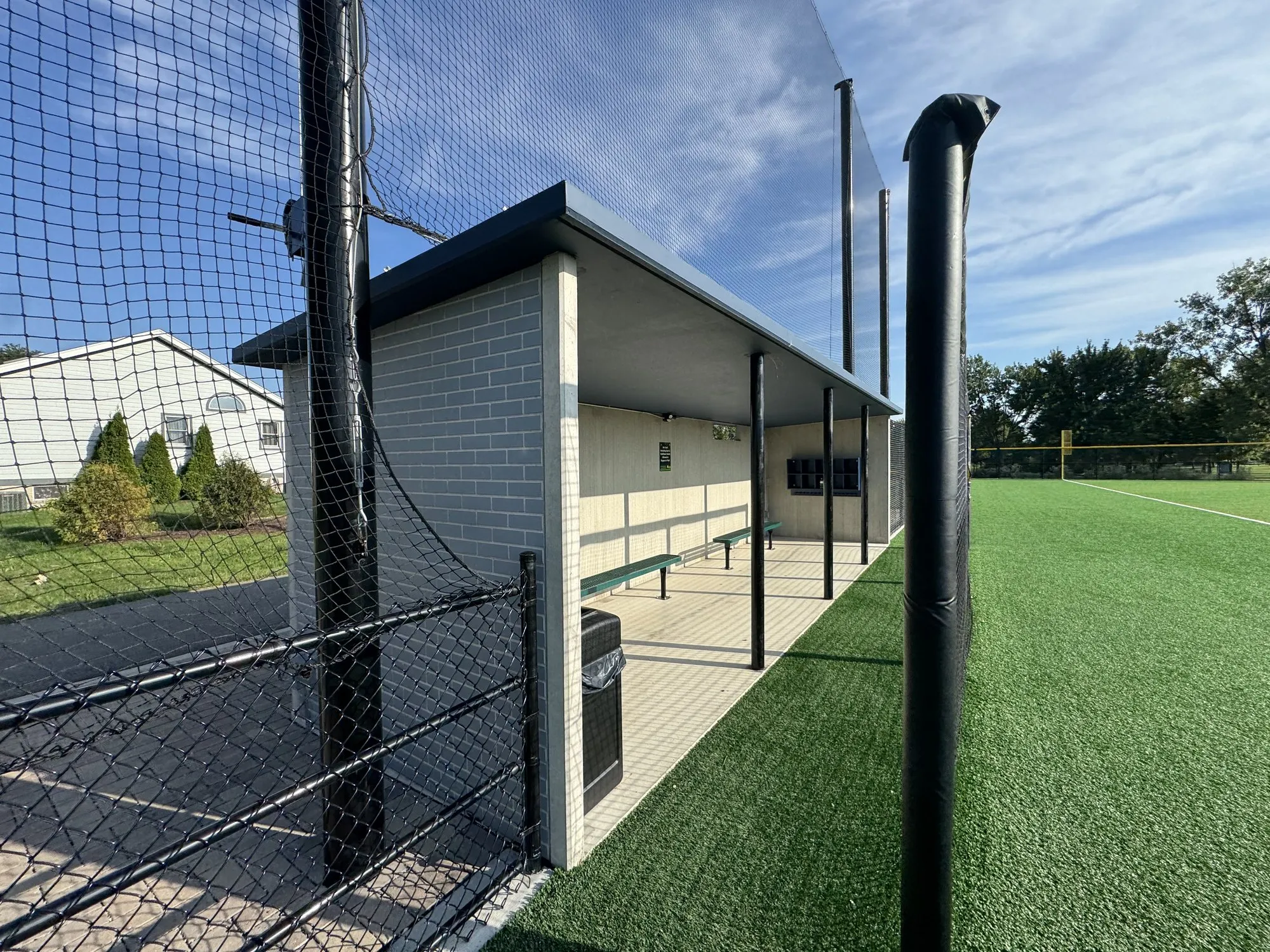
The dugouts are open to the field with a deep roof overhang, a full-length bench, and a bank of cubbies cast into the back wall. Steel posts carry the roof at the open edge. Interior surfaces are the same concrete, sealed, so the whole enclosure can be hosed out.
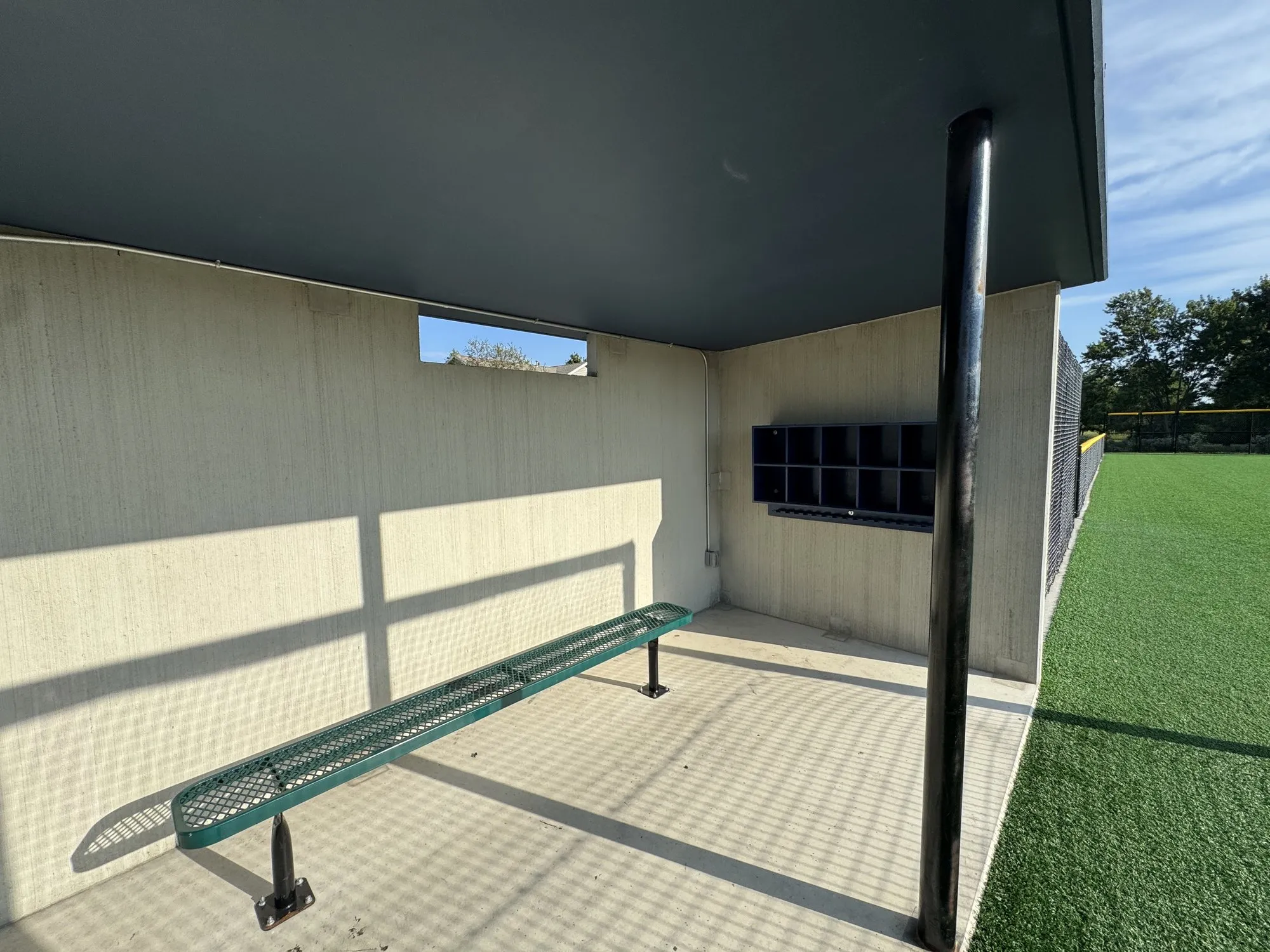
For a field used by SEASPAR athletes, an accessible dugout comes out of the same form as any other. A level precast floor, an open front, and a bench at the right height are in the casting, and the synthetic turf runs right up to the threshold.
The record
Field 32 was paid for by a state grant, district reserves, and a family’s gift, and the people who made it happen are named on the wall. The reopening coverage told that story, and it was the right one to tell.
This piece adds a line to it. A $1.2 million public field in a Chicago suburb chose precast concrete for its dugouts, took a brick finish off the form, and opened with buildings that need no upkeep. Producers in this chapter cast them. Any park board pricing a dugout can drive to Lemont and see one in use.