
Transportation · St. Francisville, IL
Wabash River Crossing
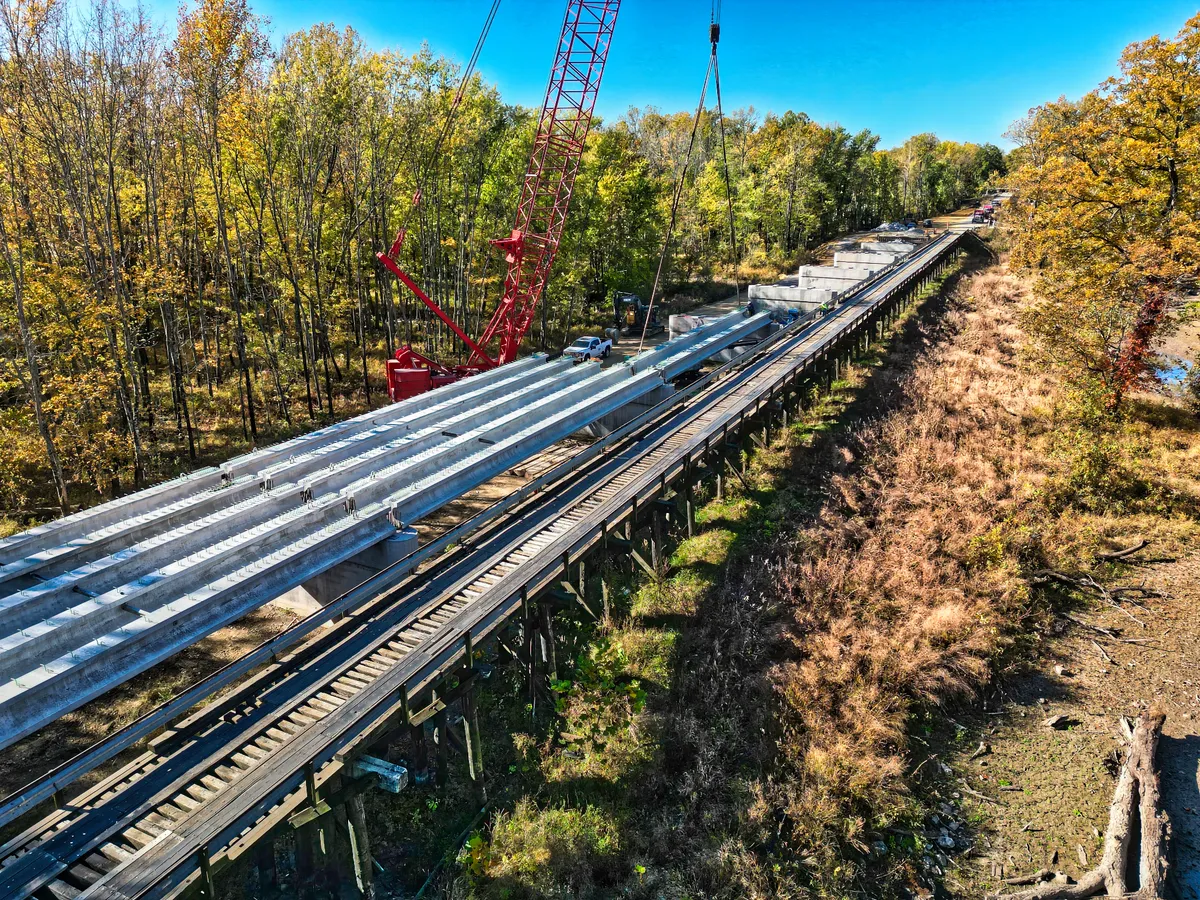
Precast concrete beams set for a new Wabash River crossing beside the historic Wabash Cannonball Bridge, which carried traffic on one lane since 1924.
The Wabash Cannonball Bridge has crossed the river between Illinois and Indiana since it was built in stages from 1897 to 1924, first for rail and later as a one-lane toll crossing. Its replacement is precast.
Beams cast in a plant and set by crane keep work over the water short, which matters on a river crossing where staging is limited and weather closes windows without warning. The finished structure is built for a service life measured in decades rather than seasons.
Why precast for a river crossing
Staging is the constraint on a crossing like this. There is limited room on either bank, the river sets the pier positions, and weather closes working windows without much notice. Casting the beams in a plant moves the slow, weather-sensitive work off the site entirely. What remains at the river is setting pieces that arrive finished and cured, which is measured in days rather than seasons.
The same logic drives accelerated bridge construction generally. Girders, deck panels, abutment and pier components, and full modular units are all produced away from the alignment and installed inside a short closure. The measure of a successful job becomes hours of disruption to traffic rather than months of lane restriction.
Durability over the service life
A bridge deck takes freeze and thaw cycles, de-icing salt, and heavy axle loads for decades. Plant-cast concrete is placed and cured under controlled conditions, which produces the consistent cover and density that resist that exposure. The result is a structure with a service life measured in decades and a maintenance schedule that does not dominate a county budget.
For bridge work in this region, see the transportation page for IDOT and WisDOT resources, or filter the producer directory by bridge certification to find plants qualified for the product you need.
Read the full story in Bridging the Past and Future.